Emmanuel de Ryckel

Emmanuel born in the Belgian Congo into an environment not particularly oriented toward the arts, followed the path his family had envisioned for him and eventually settled into a long-term role as a specialist in industrial planning and organization within the pharmaceutical sector.
In 1997, through the circumstances of his profession, he discovered Rio de Janeiro and fell irresistibly in love with the city—its culture, its people, its music. Yet his passion for music had always been there.
So when the album Chambre avec vue, with its iconic track Jardin d’hiver infused with the scents of Bossa Nova, was released in 2000, it came as a shock to him. In an instant, his childhood passion for Henri Salvador and his song Minnie petite souris, along with his newfound love for Brazil, came together in a breathtaking way.
During a first meeting with Henri, he saw in his eyes the light that shines when Brazil is mentioned, realizing how happy he was that this new album finally revealed what he had always dreamed of doing.
But Emmanuel was deeply unsettled by a rumor circulating in France, suggesting that Henri was the originator of Bossa Nova. This narrative—one he had never encountered during his many trips to Rio—led him to conduct an in-depth investigation with leading figures of Brazilian popular music (Gilberto Gil, Roberto Menescal, Marcos Valle, Joyce Moreno, Jaques Morelenbaum, among others) in order to uncover the truth.

After meticulous research, the truth has finally come to light. Based on the testimony of these artists, it is established that Bossa Nova was not created by Henri. It would indeed have existed without him, but his contribution was described as decisive: “Bossa Nova would have existed without you, but without you, it would not have been the same,” Roberto Menescal, a veteran of Bossa Nova, once told Henri—overcome with emotion in the face of such immense recognition.
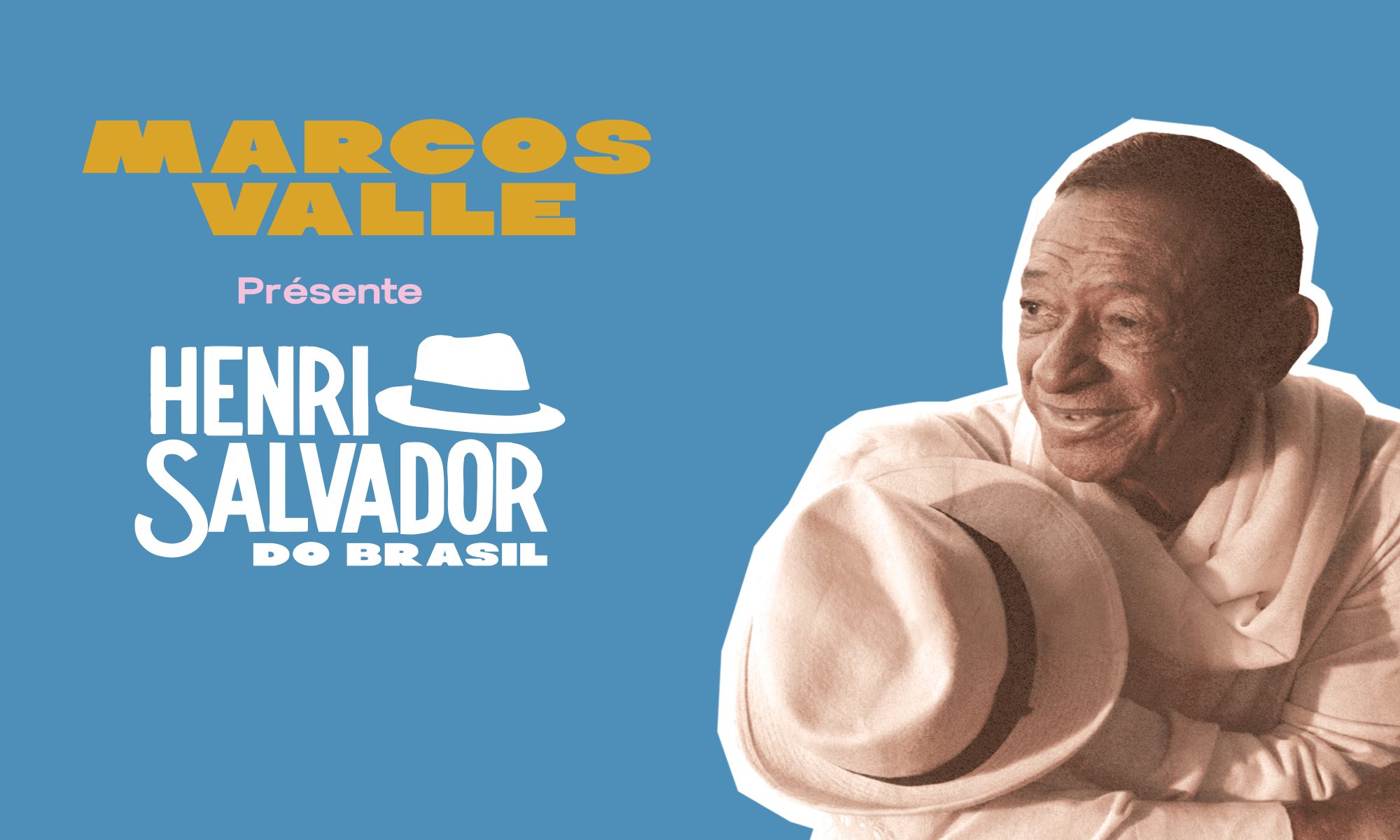
It is at the crossroads of this story, these encounters, and these years of research that this project was born: an album conceived as the culmination of a personal journey, and as a sensitive exploration of the deep ties between Henri Salvador and Brazilian music